
Lighting: The Difference Between a Furnished Room and a Finished Room
Lighting is often treated as the final decision in a room, something selected once the furniture, artwork, rugs, and finishes are already in place. In practice, it has a much larger role. Light changes how colour reads, how materials feel, and how naturally people move through a space.
A room can be beautifully furnished and still feel unfinished if the lighting is doing the wrong job. The opposite is also true. A well-placed lamp or pendant can make familiar furniture feel richer, softer, and more connected to the architecture around it.
At Alteriors, we think about lighting as part of the room’s composition from the beginning. It’s not there only to brighten the space. It gives the room rhythm, directs attention, and helps create the feeling people remember when they walk in.
Lighting Gives a Room Its Point of View
Every room needs a point of view. Sometimes that comes from a sofa, a dining table, or a piece of art. In many spaces, it comes from light.
A suspended lamp over a dining table does more than define where people gather. It lowers the visual centre of the room and creates intimacy around the table. A floor lamp beside a lounge chair can turn an unused corner into a place you actually want to spend time in. A wall lamp can soften the edges of a hallway or living area without adding another piece of furniture.
This is why lighting works best when it’s considered in relation to furniture, not separately from it. The fixture, the surface below it, and the surrounding materials all have to speak to each other.
For a helpful look at how lighting works across interior spaces, ArchDaily’s overview of artificial lighting in interior design shows how different applications of light can change the mood, depth, and function of a room.
Flos and the Balance of Function and Presence
Few brands show the relationship between utility and atmosphere as clearly as Flos.
The Flos Arco Floor Lamp is a perfect example. Designed by Achille and Pier Giacomo Castiglioni, Arco was inspired by the everyday structure of a streetlight, then refined into something made for interior life. The marble base gives the lamp weight and permanence, while the long arc carries light outward, allowing it to illuminate a table, sofa, or seating area without needing a ceiling fixture directly above it.
That matters in real homes. Not every room is wired exactly where you want the light to fall. A piece like Arco allows the lighting plan to adapt to the way the room is actually used.
Flos also offers more expressive options, like the Aim Suspension Lamp, where the cable becomes part of the composition. Rather than hiding the mechanics, the design lets them shape the room. It’s a strong choice for spaces that need movement, direction, or a less conventional focal point.
The Softness of Diffused Light
Some rooms need drama. Others need softness.
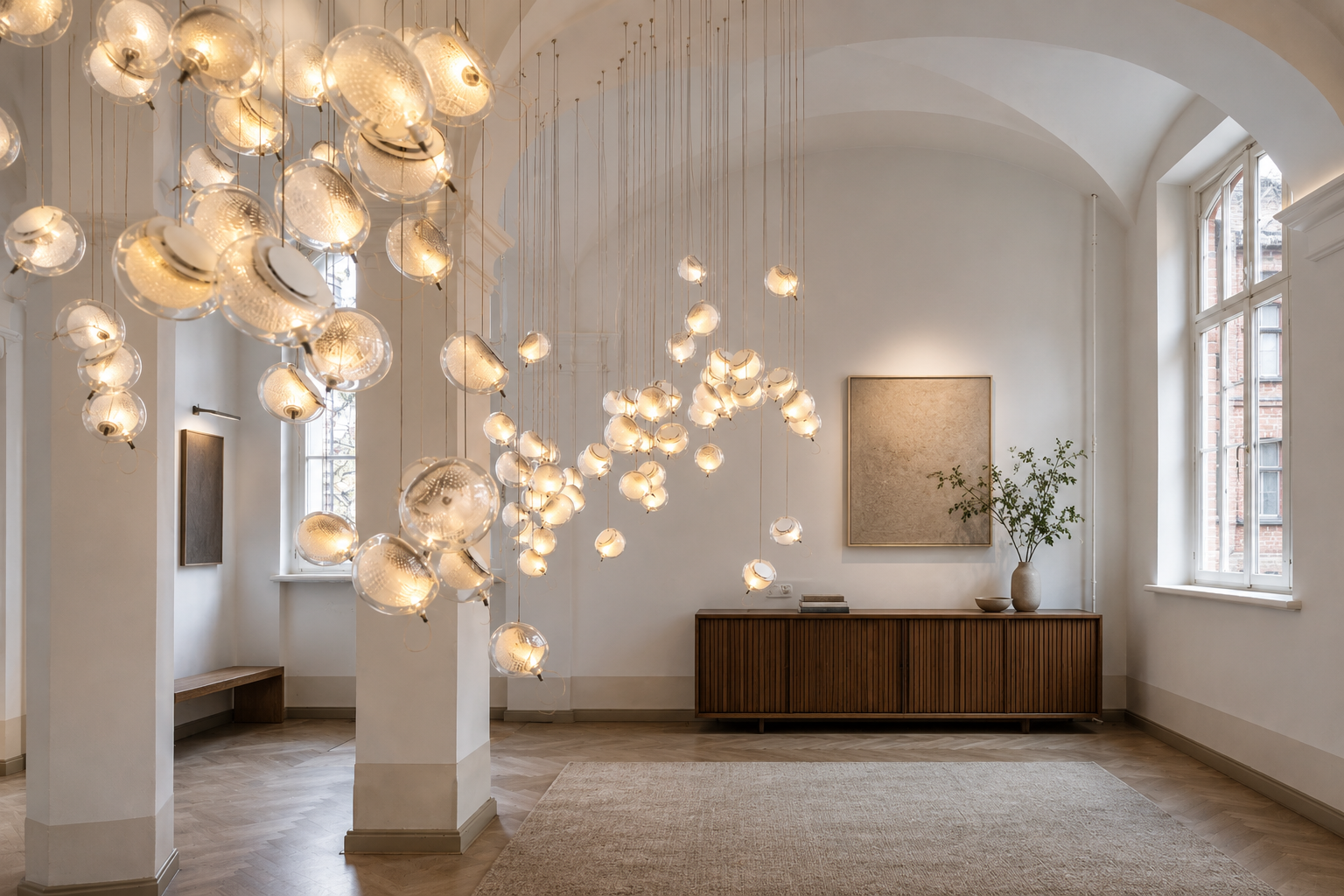
That’s where diffused lighting becomes important. A fixture that filters light through glass, fabric, or sculptural form can change the atmosphere of a room without overwhelming it. It softens shadows, reduces glare, and gives the space a more relaxed visual texture.
Collections from Foscarini often bring this quality into a room through shape and material. Pieces like Fleur show how lighting can act almost like an object in the room, adding character even when the lamp is not switched on.
This is one of the reasons lighting should be selected with the same care as furniture. During the day, the fixture contributes to the room visually. In the evening, it changes the way the whole space is experienced.
Layering Light Without Overcomplicating the Room
A good lighting plan doesn’t mean filling the room with fixtures. It means giving each source of light a purpose.
In a living room, that might include a pendant or ceiling fixture for general atmosphere, a floor lamp for reading, and a table lamp to create a lower, more intimate glow. In a dining room, one strong suspended piece may be enough, especially when supported by natural light during the day and softer surrounding light in the evening.
We carry lighting across several categories, including table lamps, floor lamps, suspended lamps, and ceiling and wall lamps. Each category serves a different role, and the most successful rooms often bring two or three of those roles together.
The goal is not to make lighting complicated. It’s to make the room feel natural at different times of day.
Lighting Makes Materials Come Alive
Furniture and lighting are deeply connected because light determines how materials are seen.
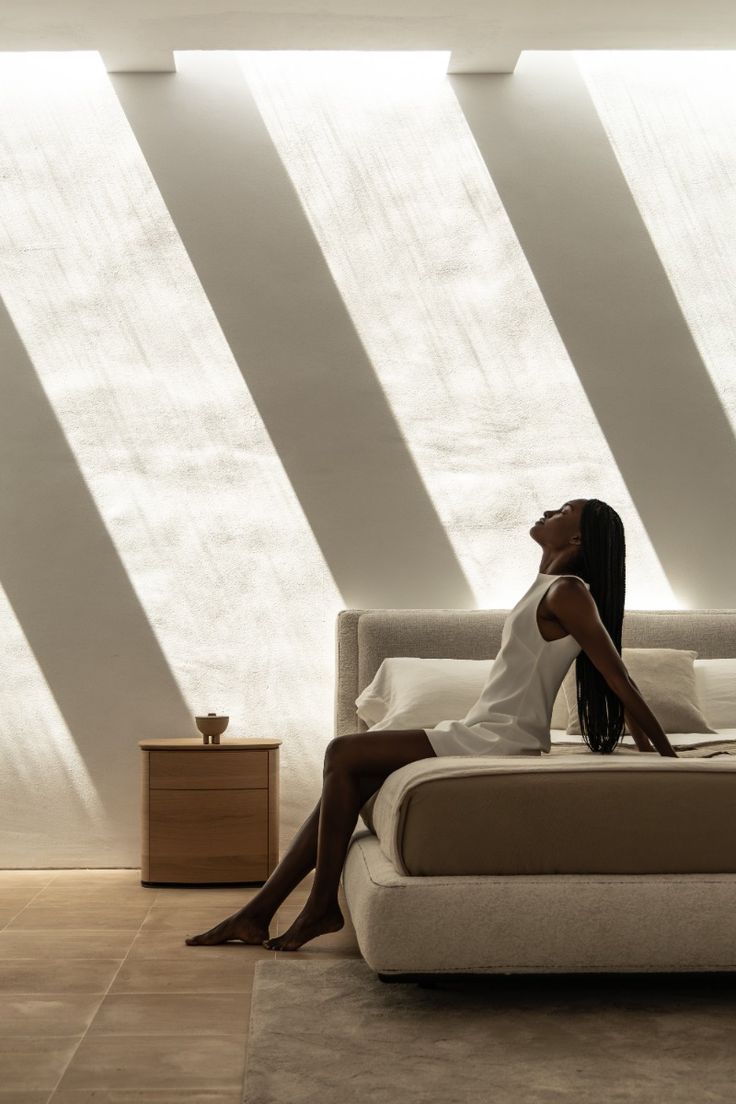
A textured rug from Nanimarquina will feel different under direct light than it does under a softer lamp. A wood table, leather chair, or stone surface can take on more depth when light hits it from the side rather than from above. Even neutral colours shift depending on the warmth and direction of the light around them.
That’s why a room can look complete in daylight and feel flat at night. The furnishings haven’t changed, but the relationship between light and material has.
When we look at lighting in a room, we’re also looking at what it reveals.
The Alteriors Approach
At Alteriors, we don’t see lighting as a finishing touch. We see it as one of the decisions that determines whether a room feels composed, comfortable, and complete.
Sometimes that means choosing a sculptural floor lamp to define a seating area. Sometimes it means adding a softer table lamp to bring warmth into a room that feels too architectural. In other cases, it means starting with the light first because it will influence every other decision around it.
If you’re rethinking how your home feels, lighting is often the place to begin. Explore our lighting collection or visit our Ottawa showroom to see how pieces from Flos, Foscarini, Herman Miller, Bocci, Lambert & Fils, and other design-led brands can change the way a room comes together.


