


Description
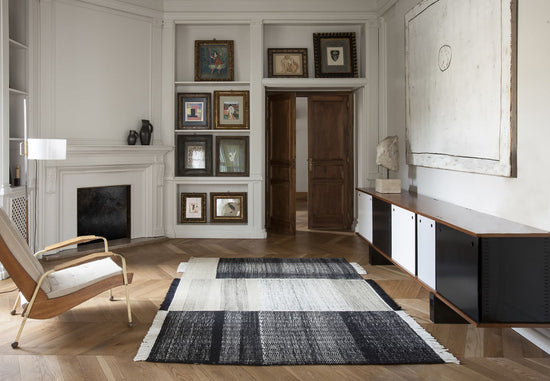
Marcel Breuer 1929 MB Lounge is part of the architect’s extensive work using tubular steel, a revolutionary material in furniture construction at the time. In a contrast to the Wassily Chair—one of Breuer’s best-known designs from the Bauhaus—the MB Lounge features a seemingly continuous, freefloating frame, simultaneously reflecting a tensile strength and straightforward elegance. The chair combines an upholstered foam cushion supported by horizontal metal springs that provide slight movement to the back, along with natural oak armrests that have a clear lacquer finish.
MEASUREMENTS:
- Height: 30.5 inch
- Width: 23.5 inch
- Depth: 32 inch
MATERIALS:
- Frame is seamless tubular steel with a polished chrome finish
- Upholstered foam cushion is supported by horizontal metal springs
- Armrests are natural oak with clear lacquer finish
HELPFUL NOTES:
- Certified Clean Air GOLD
- Four plastic glides snap into pre-drilled holes on base of the chair
- The KnollStudio logo and signature of Marcel Breuer are stamped into the base of the chair
Designer

Marcel Breuer
Hungary, 1902 – 1981
Marcel Breuer trained at the Bauhaus in Weimar, Germany and is heralded as having produced the first tubular steel armchair, his pieces pioneering the demand for tubular steel furniture throughout the 1920s and 1930s. These pieces, along with his innovative laminated wood furniture and his unique architectural interpretation of light and space yielded a great deal of international respect and inspired the work of a wide range of designers.
Breuer studied under Walter Gropius at the Bauhaus from 1920-24. When the Bauhaus moved to Dessau in 1925, Breuer designed furniture for the new campus and became head of the furniture workshop. Also in 1925, Breuer created the famous tubular steel Wassily chair, made for Wassily Kandinsky’s space in Dessau. It made the user look as though they were floating on the seat within the steel cube frame. The chair was innovative in that it was extremely light and was built entirely from ready-made tubes that were welded together.
In 1928 Breuer started a private practice in Berlin and came out with his Cesca cantilever chair, inspired by Mies Van der Rohe. A 1936 molded plywood chair he made inspired the work of the Eames a decade later and his nested tables revisited the form he had produced earlier in steel.
In 1937 Breuer moved to America and worked as an architect with Gropius in Massachusetts. From 1937-1947 he taught architecture at Harvard, and was commissioned by his former student Eliot Noyes to design buildings for IBM.
Breuer is seen as one of the forefathers of the energetic aesthetic of uninhibited experimentation combined with a high standard of artistry that the design industry enjoyed throughout the second half of the century. Breuer retired from active practice in 1976 and died five years later, in 1981.
Shop all designs by Marcel Breuer
Shipping
Complimentary white glove shipping included.
For further information on our shipping policies click here.
For further information on returns + refunds click here.